How to Use Easy Cut Printing Blocks
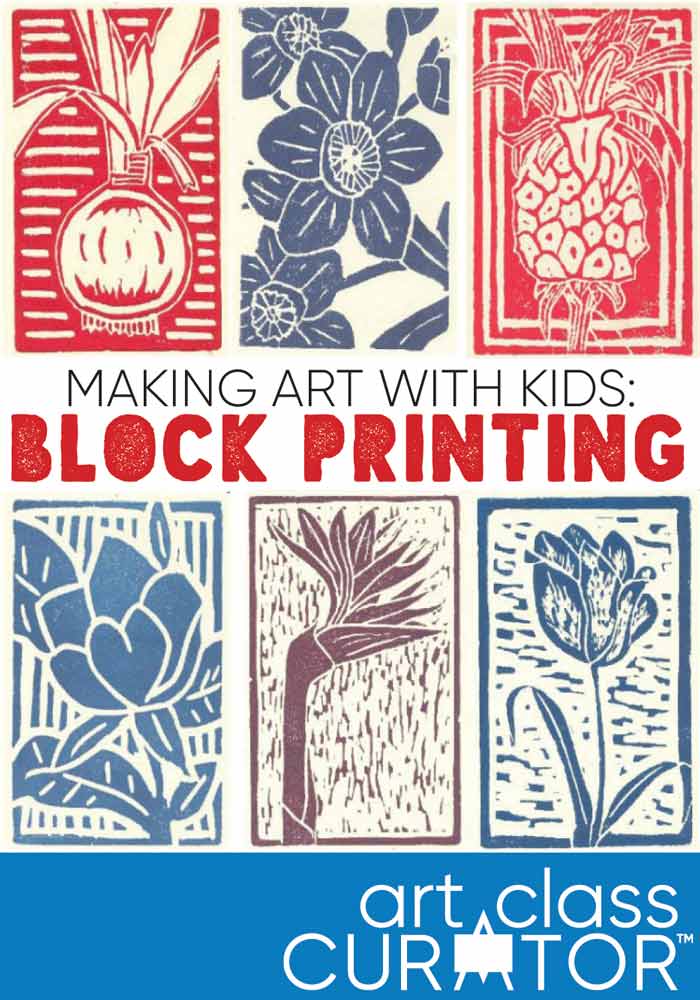
Block printing is one of my favorite things to do with kids (and with myself for that matter, who needs a kid to have fun with art?). Later in the week, I will be featuring some Japanese woodblock prints as part of my Art Spotlight series, so in preparation for that, I will show you some ways to make block prints at home.
Please note, this post includes Amazon affiliate links. As an Amazon Associate I earn from qualifying purchases.
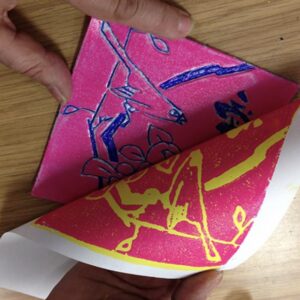
Free PDF!
Printmaking Instructions
Display, print, or laminate these instructions to show students each step in the printmaking process.
What is a Block Print?
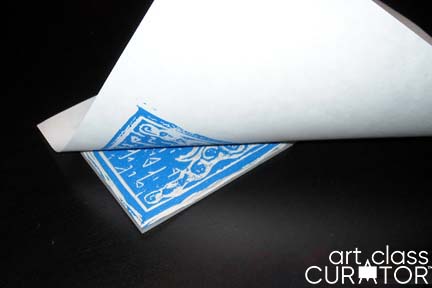
You can think of a block print kind of like a homemade stamp. You take a material like wood ("woodcut") or linoleum ("linocut") and carve away every part of the image you want to be white (or whatever color your paper happens to be). Professional printers from throughout art history use layered color and precise tools to make beautiful and detailed works, and you and your students can too using the processes I describe below. Although it is possible to make a print with multiple colors, I recommend starting with one color. There are lots of ways to make block prints at home with your kids, and I will focus on two types here in this post: foam printing and linocut printing.
Foam Printing
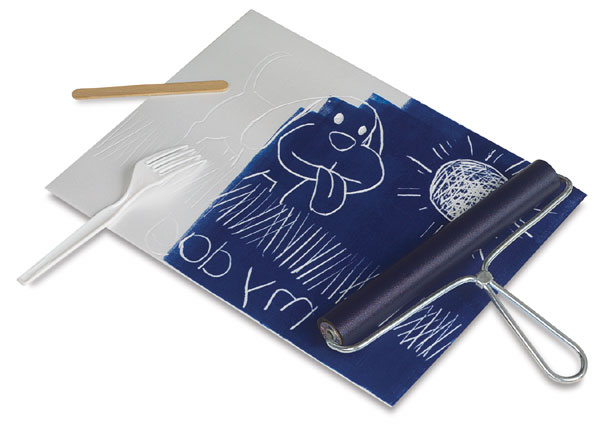
Foam printing involves drawing deep lines into Styrofoam and using ink or paint to transfer this image onto paper. This is the cheapest way to do a block print and the safest and most accessible for young children. One way is just taking a Styrofoam plate, cutting off the rim so you end up with a flat disk, and carving/drawing on it with a dull pencil, a stick, or a ballpoint pen. Make sure the lines you draw are pressed deep into the foam for the best results. Next, spread printing ink (or even some tempera paint thinned just a bit with some water) over the surface of the foam using a paintbrush or roller (see more tips about spreading the ink below). Then put your paper on top, press down over the whole surface of the paper with the back of a spoon or a roller, and then lift the paper off.
Try it a few times first so you know exactly the right process before you have the kiddos do it as this can sometimes not work well if you don't push down hard enough or use paint instead of printing ink. I recommend using ink because the results will be much cleaner! Instead of using a plate, you can also buy packs of foam printing plates for this same purpose in a variety of sizes. You'll have better results with these and you don't have to worry about chopping up the plates. See the supplies list at the bottom of this post for recommendations and links.
Linocut Printing
My favorite way of block printing is to use easy-cut rubber blocks that more closely mimic the process of using linoleum and wood but is still easy enough for an elementary-age student to cut (with close supervision). You need some specialized supplies for this, but they are not too pricy and they can be used over and over with the exceptions of the blocks themselves. See a supply list with links at the end of the post.
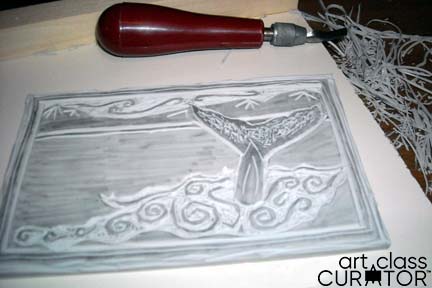
First, sketch the design onto the print block. You can use transfer paper to transfer a drawing or draw right on the block. Tracing your design in a permanent marker will help you when you start cutting. Also, be sure to do all text and numbers backward as the resulting print is a mirror image. Next, use a linoleum cutter to carve out all of the areas of the design that you want to be white. This tool usually comes with several tips for different thicknesses of lines. If you have a true linoleum block, this will take some muscle. If you have an easy-cut rubber block, it will cut smoothly and quickly, like butter. I've had upper elementary age kids use these with little trouble.
Safety Tip: Be sure to push away from your hands and your body when using this tool! I have a nice v-shaped scar on my pointer finger of my left hand from doing this on real linoleum on my bed when I was in college. It wasn't a smart decision.
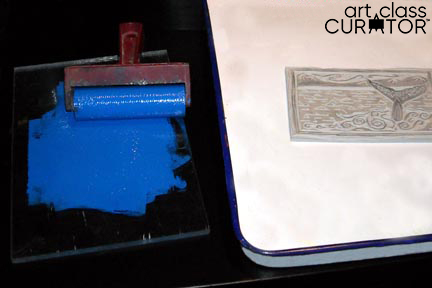
Next, spread some ink on an inking plate, a piece of glass, plexiglass, or anything non-porous and flat. Water-based printing ink is best. You can use tempera or acrylic paint, but it doesn't work as well. Use a soft roller (or "brayer") to roll the ink flat. Go in both directions to spread the ink evenly on the roller. Roll the ink onto the print block and then put the paper on top of the block. Use the back of a spoon or a second roller to press the paper onto the block (this is called "burnishing"). Here is a great video that covers the basics of how to ink and print.
Supplies
These are basic art supplies that you can buy at any art supply store, but I have put the Amazon affiliate link for your convenience.
- Foam Printing Plates
- Water-based Printing Ink
- Soft Brayer for Inking
- Linoleum Cutter
- Easy-cut Linoleum Blocks
- Inking Plate/Bench Hook
Like this? Stay tuned for an Art Spotlight post later in the week about Japanese woodblock prints! Let me know if you tried any of this out! I'd love to see your student's work. Please share your pics below or on twitter.
This post was originally published June 30, 2014.
thomasgoodditin81.blogspot.com
Source: https://artclasscurator.com/making-art-with-kids-block-printing/
0 Response to "How to Use Easy Cut Printing Blocks"
Enregistrer un commentaire